A home for a family’s work
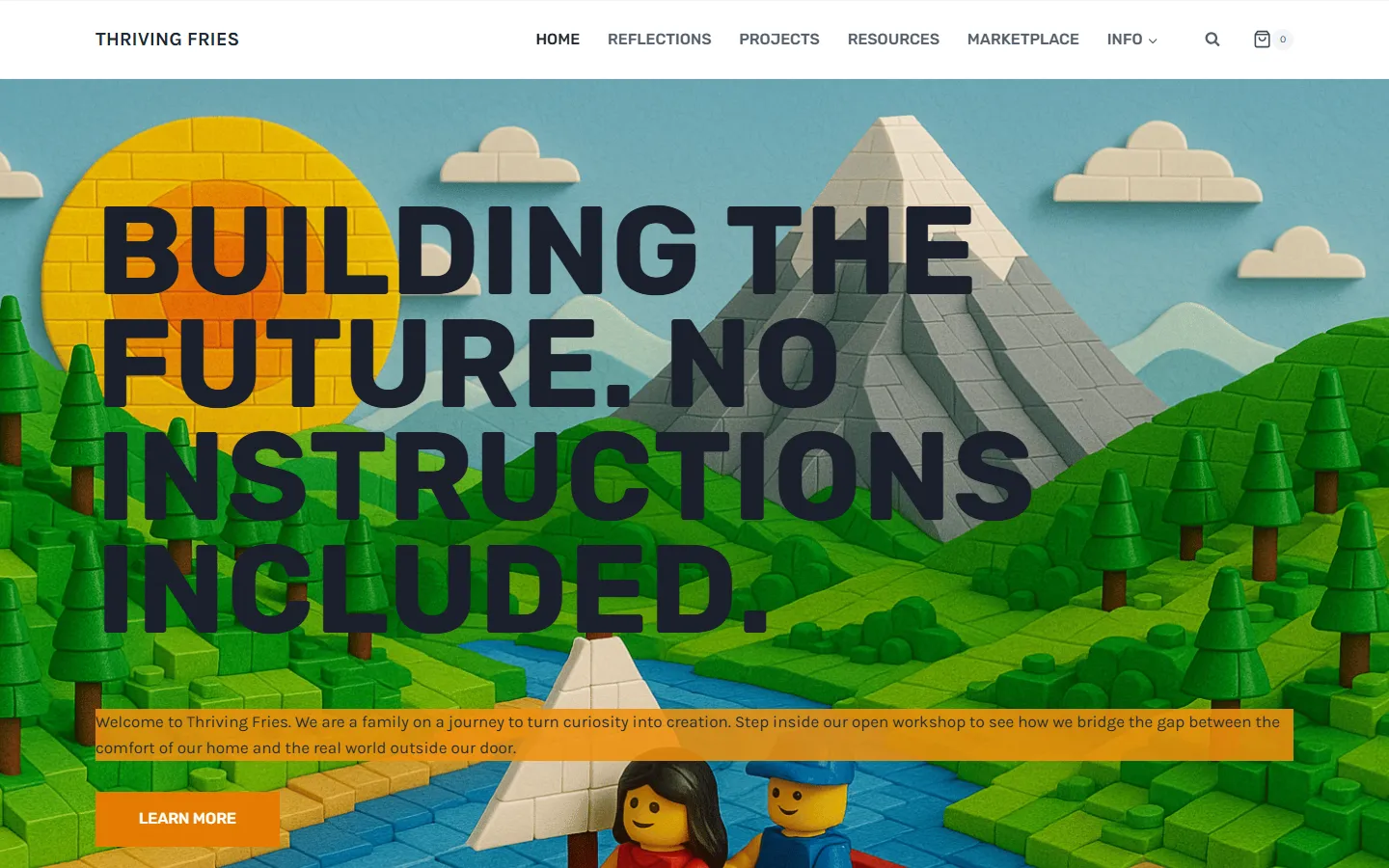
Thriving Fries is a family learning and creation platform. It brings together the resources used at home, the projects that grow from them, the thinking behind the work and selected products created to share with others.
I designed and developed the website around that cycle. The goal was a welcoming digital workshop where writing, useful materials, hands-on work and commerce could fit within one coherent experience.
The design problem: several kinds of content
A book recommendation needs different information from a project account. An interactive activity needs a useful home of its own. A digital product needs a clear description and a route into the store. Creator contributions also need to remain connected to the people and ideas behind them.
The platform uses WordPress for publishing and content management, with distinct destinations for reflections, projects, the learning library and the marketplace. A playful workshop identity ties the sections together while the underlying content structure makes each format easier to maintain.
A structured learning library
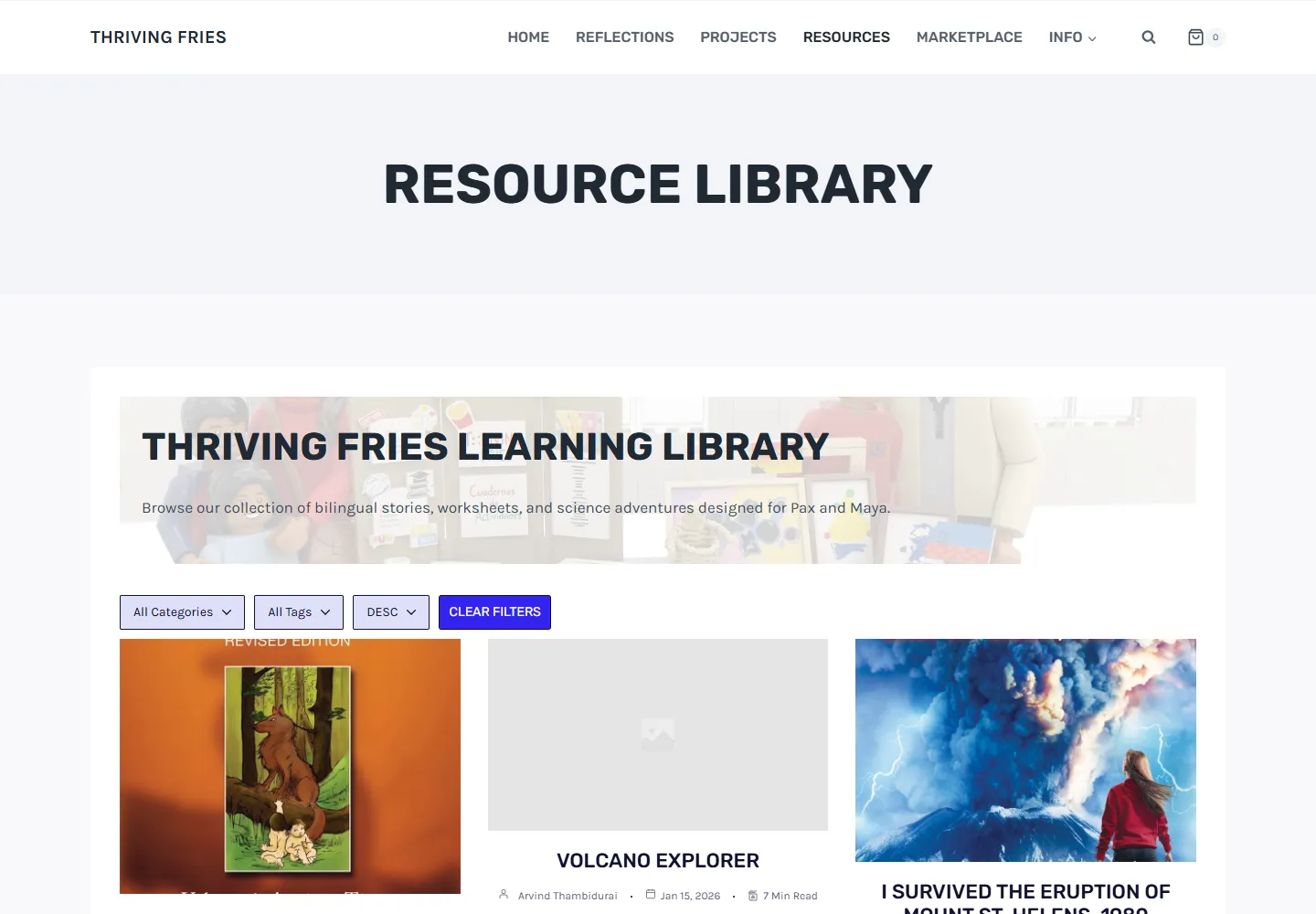
Resources have their own WordPress content type, with subject, language and resource-type taxonomies. That structure supports a library containing books, curricula, worksheets, bilingual materials and interactive activities.
The current library presents resource cards with category and tag filtering, ordering and pagination. Individual resource pages provide the detail, context and related material that a short card cannot carry. The collection includes reading and writing tools, history resources and science activities such as Volcano Explorer.
This makes the content model part of the product: a resource can be discovered, understood and connected to other learning, rather than disappearing into a chronological feed.
Publishing that connects ideas and creators
The Projects section gives longer-running work a dedicated place. Current examples include a hands-on ancient-history timeline, a reading initiative and a family science-lab portfolio. Reflections provide a separate editorial destination.
Bylines, author archives, categories and tags connect contributions with their creators and context. The broader published collection also includes English/Spanish material and connected article series. These are familiar WordPress publishing patterns arranged around the family’s actual work.
Digital products within the same experience
A WooCommerce storefront presents family-created digital materials alongside the editorial and resource sections. The current catalogue includes Animals of Ecuador – The Sierras, a printable bilingual activity book.
Its product page connects the item with related resources and writing. That relationship gives a product context: visitors can move between a learning idea, the work behind it and a material they may find useful. Product presentation and the store are part of the same visual and navigation system.
Room for interactive learning tools
The site also gives software experiments a place to be explained and explored. Volcano Explorer is presented within a resource page, with topic tabs, an anatomy diagram, historical examples and a quiz.
Related development extends beyond WordPress. The published MathQuest project account describes a family math-practice experiment combining arithmetic, story progression and progress records. Its separate application repository documents a pilot implementation. A separate reporting utility implements feedback collection, Google Sheets recording and PDF report generation, with filing and email integrations available through configuration.
Those applications retain their own implementation and release status. MathQuest is an exploratory pilot alongside the WordPress publishing platform, with its own codebase and development process.
The resulting foundation
Thriving Fries now provides a connected home for finding learning materials, documenting projects, recognizing contributions and presenting digital products. The work demonstrates how content modelling, web development and commerce can support a specific creative workflow while leaving space for new formats and tools.